
Getting Your Ham Radio License
Getting licensed is more approachable than it may look.
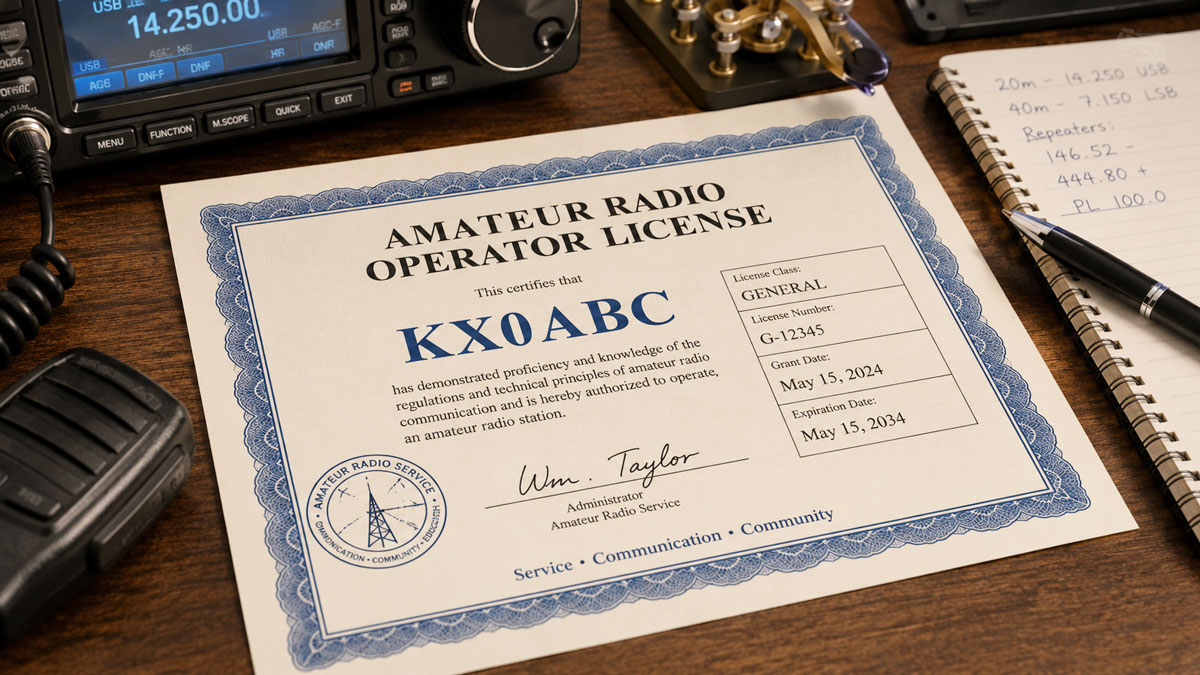
You do not need an engineering background, years of radio experience, or a station full of equipment to become an amateur radio operator.
For most people, the path is straightforward: study for the entry-level Technician license, take an exam, complete the FCC licensing process, receive your callsign, and get on the air.
There will be some unfamiliar terminology along the way. You don't need to understand the entire hobby before you begin.
Which license do i need?
There are three current amateur radio license classes in the United States: Technician, General, and Amateur Extra.
If you're new to amateur radio, the answer is simple:
Start with Technician
Technician
Your first amateur radio license.
Technician is the entry-level license and the starting point for most new operators.
It gives you full amateur privileges on frequencies above 30 MHz, including the VHF and UHF bands commonly used for local communication and repeaters, along with limited privileges on several HF bands.
The Technician exam consists of 35 questions covering basic regulations, operating practices, radio theory, electronics, antennas, and safety.
You don't need to master all of amateur radio to pass it. You need a foundation that will allow you to begin operating safely and legally—and continue learning from there.
General
More access to HF and long-distance operation.
General is the next license class after Technician and greatly expands the portions of the HF bands available to you.
Many operators eventually upgrade when they become interested in HF, long-distance contacts, contesting, digital modes, or other activities that benefit from the additional privileges.
There's no reason to worry about it yet if you're just getting started.
Amateur Extra
The highest current U.S. amateur radio license class.
Amateur Extra provides the full operating privileges available to U.S. amateur radio operators.
Some hams make Extra a goal. Others find that Technician or General gives them everything they want from the hobby.
You can decide that later.
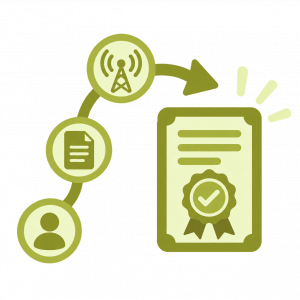
How getting licensed works
The terminology surrounding amateur radio licensing can make the process sound more complicated than it is.
Here's the basic path.
1. Study for the Technician exam
Amateur radio examinations are created from published question pools, so the material you're responsible for isn't a mystery.
You can prepare with a study guide, online course, videos, flash cards, practice exams, or a combination of them.
Use whatever approach works for you. Just make sure your study material is based on the current Technician question pool.
2. Get your FCC registration number.
You'll need an FCC Registration Number, usually called an FRN, as part of the examination and licensing process.
Your FRN identifies you within the Federal Communications Commission's registration and licensing systems.
If you don't already have one, you can register through the FCC's CORES system.
[Get an FRN through FCC CORES]
Don't worry if the acronyms are unfamiliar. You don't need to become an expert on FCC websites to become a ham.
3. Take some practice exams
Practice exams are one of the easiest ways to see whether you're ready.
They also show you where you need more work. If you consistently miss questions about antennas, regulations, or electrical concepts, you know where to spend a little more study time.
Aim for a solid understanding of the fundamentals and consistent passing results—not perfection.
4. Find an exam session
Amateur radio exams are administered by accredited volunteers known as Volunteer Examiners, or VEs.
Exam sessions are available both in person and remotely online.
Check the details for the particular session you plan to attend. Registration procedures, identification requirements, exam fees, and other instructions can vary between exam teams.
You can also check the SVARC event calendar for licensing and testing opportunities in our area.
5. Take the technician exam
When you're consistently doing well on practice tests, schedule the exam and give it a shot.
And one question we can get out of the way right now:
No, you do not need to know Morse code.
Morse code—or CW—is still actively used by amateur radio operators who enjoy it, but it is not required for a U.S. amateur radio license.
6. Receive your license and callsign
After you pass, the examination organization submits your information for processing.
Follow the instructions you receive regarding any FCC application requirements or fees. Because government procedures can change, it's better to rely on the current FCC instructions than an old article or tutorial.
Once the FCC grants your license and your callsign appears in its licensing database, you're ready to begin transmitting within the privileges of your new license.
Preparing for the Technician Exam
Learn what you need to get started. The rest comes later.
Amateur radio is a huge hobby. It can involve antennas, electronics, repeaters, digital communications, satellites, emergency communications, portable operating, long-distance HF contacts, computers, radio propagation, contesting, and plenty more.
You aren't expected to understand all of that before earning your first license.
A good study plan can be pretty simple:
Learn the basic concepts
Understanding why an answer is correct will usually serve you better than memorizing a string of answers without context.
Use the current question pool.
The questions used to build amateur radio examinations are published. Familiarity with them helps you understand what will actually be expected on the exam.
Take practice exams.
Use practice tests to measure your progress and identify areas that need more attention.
Look up unfamiliar terms.
Ham radio comes with a lot of jargon. If terms like simplex, repeater, offset, PL tone, SWR, HF, VHF, or UHF are getting in the way, our glossary explains them without assuming you already speak radio.
Ask questions.
Sometimes another operator can explain in five minutes what hasn't made sense after an hour of reading.
That's one of the advantages of having a local amateur radio community nearby.
Recommended Licensing Resources
You do not need a dozen different websites to prepare for your license. These resources cover the essentials: official FCC licensing, exam information, and study tools.
FCC CORES
Register for or manage your FCC Registration Number (FRN).
You’ll need an FRN as part of the amateur radio licensing process. Use the FCC’s CORES system to create or manage your registration.
Get or manage your FRN
ARRL — Getting Licensed
A solid overview of the amateur radio licensing process.
ARRL provides information about license classes, preparing for your exam, what to expect on test day, and how the licensing process works.
Explore ARRL licensing resources
ARRL — Find an Exam
Find an amateur radio exam session near you or online.
Search upcoming Volunteer Examiner sessions and find a testing option that fits your schedule.
Find an exam session
HamStudy
Study the current Technician question pool and take practice exams.
HamStudy lets you work through the material, track your progress, and take realistic practice tests using the current Technician exam pool.
Study for the Technician exam
Common Questions
Do I need to know Morse code?
No. Morse code is not required for any current U.S. amateur radio license.
Learn it later if it interests you.
Do I need an electronics background?
No.
You'll encounter basic electrical and radio concepts on the Technician exam, but previous electronics experience isn't required.
Plenty of amateur radio operators entered the hobby with little or no technical background.
Do I need to own a radio before getting licensed?
No.
You can study, take the exam, and become licensed without owning a radio.
Waiting until you understand your options can also help you avoid buying equipment that isn't a good match for what you actually want to do.
[First Radio & Beginner Gear →]
Can I take the exam online?
Yes.
Both in-person and remotely administered amateur radio exam sessions are available.
Do I have to join a club?
No.
Your amateur radio license is issued through the FCC and is completely separate from membership in SVARC or any other amateur radio club.
A club simply gives you something a study guide can't: access to other people who have already done this.
You Don't Have to Figure It Out on Your Own
Studying for your first license can feel a little like learning a new language.
Eventually, terms like repeater, offset, SWR, and HF become ordinary. Right now, they may mean absolutely nothing to you.
That's fine.
If you're stuck on something you're studying, confused by the licensing process, or simply want to talk to someone who has already gone through it, reach out.
SVARC includes operators with a wide range of interests and backgrounds, and helping newer operators learn has long been part of the club's activities.
You don't need to know the right terminology before asking a question.
[Contact SVARC]
You Passed. Now What?
Getting your callsign isn't the finish line. It's where amateur radio actually begins.
Fortunately, the next steps don't have to be complicated either.
Choose Your First Radio
Learn the basic types of amateur radio equipment, what matters when you're getting started, and what you probably don't need to spend money on yet.
[First Radio & Beginner Gear →]
Make Your First Contact
Learn the basics of getting on the air, using repeaters, making your first call, and becoming comfortable actually using your new license.
[First Week On The Air →]
Decode the Jargon
Keep the glossary nearby as you explore the hobby and encounter unfamiliar terminology.
[Plain-English Glossary →]